
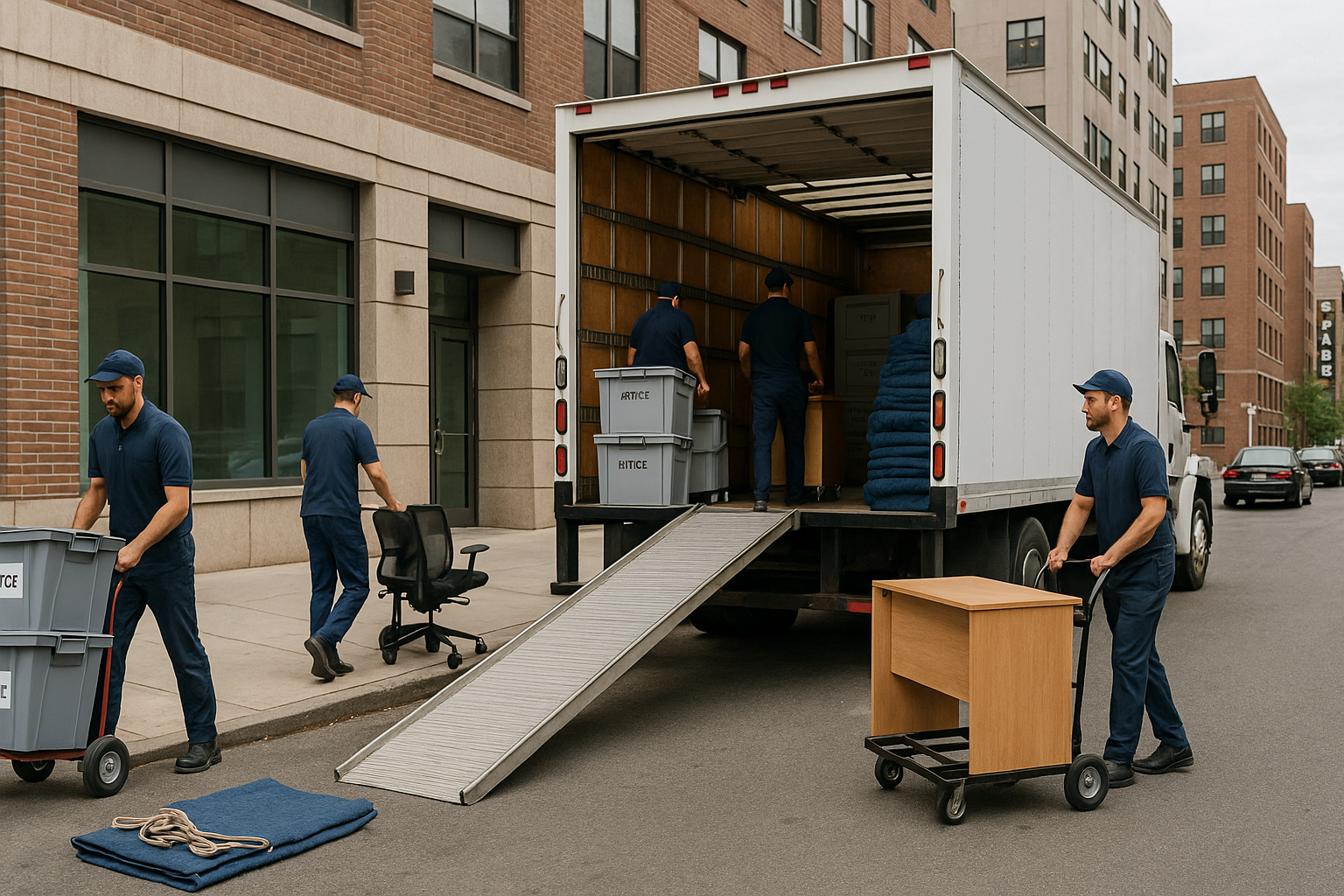
If you are planning an office relocation and wondering how much commercial movers cost, the commercial moving team at 5 Star Movers LLC in Bronx, NY offers a practical benchmark for real world pricing and move planning across local and long distance business moves.
Commercial movers typically cost more than standard residential movers because they handle heavier furniture, sensitive equipment and tighter timelines, and in the Bronx it is common for small offices to spend several thousand dollars for a professionally planned and executed relocation.
There is no single flat price that applies to every commercial move in Bronx, NY. Instead, movers calculate costs using a combination of time, labor, truck use, materials and complexity. For local office relocations this usually means a minimum charge that covers a base number of hours and crew members, then additional hourly or project based fees for larger jobs.
Commercial projects are also influenced by building access rules, required certificates of insurance, union requirements in some facilities and any after hours or weekend scheduling. These non negotiable conditions can affect the amount of labor the mover must assign, which in turn raises or lowers the final invoice.
Because commercial moves involve business downtime, many companies value predictable pricing more than the lowest possible rate. It is common to request a structured estimate that breaks down labor, trucks, packing, materials and any optional services so the finance team can compare scenarios and decide what level of service best matches the budget.
Key factors that affect commercial moving prices
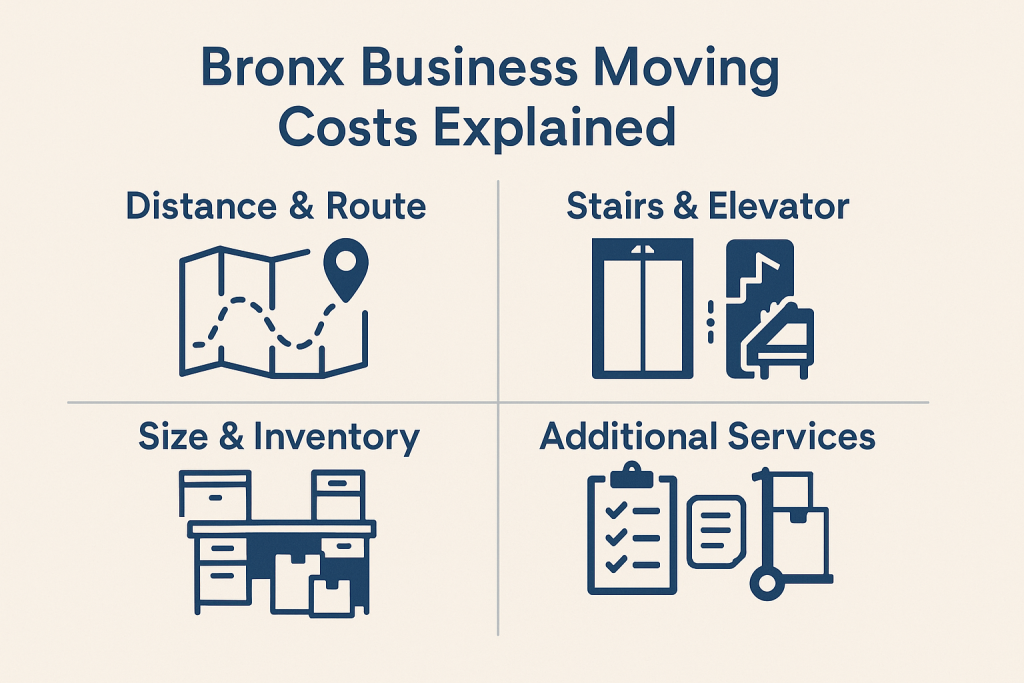
Commercial moving costs are mainly affected by the size of your office, the number of workstations and files, the distance between locations, building access conditions and the level of services you request such as packing, IT handling and storage.
For a Bronx company, a move that involves only a few offices and open plan desks will be simpler and cheaper than relocating multiple floors with conference rooms, archives and specialty equipment. When you add requirements like packing sensitive documents, labeling hundreds of crates or disconnecting and reconnecting computers, the labor hours increase significantly.
Distance also matters, even for moves within the Bronx or nearby boroughs. Time spent in traffic, navigating loading zones and securing parking near each building is part of the operating cost the mover must cover. Long distance relocations involve different pricing structures and often use weight or larger project based fees.
Access conditions at both locations can add cost quickly. Moves that require travel up multiple flights of stairs, tight elevators, loading through narrow corridors or working within restricted time windows will require additional staff or more hours. This is common in high rise buildings and older mixed use properties.
Finally, the scope of service you choose will significantly influence cost. Full service options that include packing, labeling, furniture disassembly and reassembly, protection of floors and walls and detailed placement will price higher than basic transport only service where your staff handles most preparation and setup work.
Size and layout of your Bronx office
The size and layout of your office is one of the most visible cost drivers. A compact open plan space with twenty workstations, a small reception area and one meeting room can usually be moved faster than a suite with many private offices, large conference rooms and multiple storage rooms.
Irregular layouts with long corridors or split levels complicate the path movers must take with heavy carts and dollies. Each additional doorway, ramp or narrow turn increases handling time and the risk of damage, so crews move more slowly and carefully. This level of control is necessary but it also lengthens the billable hours.
If your company uses large copy machines, server racks, safes or specialized manufacturing or medical equipment, these items often require special handling, additional staff or even third party rigging. The complexity of this equipment handling is usually itemized on the estimate because it deviates from standard desk and chair moves.
Distance, access and building rules
For local Bronx office moves, distance is often measured more in driving time and access conditions than raw miles. Short hops between nearby neighborhoods like Castle Hill, Throgs Neck and Soundview can still require significant time if loading zones are limited or elevators are shared with other tenants. Tumblr
Building rules strongly influence scheduling. Some management companies require moves to happen only during evenings or weekends, require advance reservation of freight elevators, limit how many trucks can load at once or require detailed insurance certificates. Compliance with these rules can add coordination time and often qualifies for premium after hours rates.
Access at both origin and destination also matters. Ground level doors near loading docks reduce handling time, while moves that require crews to cross long distances between truck and elevator, or that prohibit the use of loading docks entirely, may prompt movers to assign more staff or extra time blocks to keep the move within the reserved window.
Services included in your commercial move
The list of services you ask the mover to provide is a major price lever. At a minimum, commercial movers typically include loading, transport and unloading of standard office furniture and labeled crates. Anything beyond that, such as systematic packing, workstation cabling, e waste removal or decommissioning, generally appears as additional service items.
Packing services can include providing boxes or rentable crates, labeling, packing desk contents and common areas, and unpacking at the new site. Each of these tasks has an associated labor estimate. Companies that want their staff to focus on client work rather than packing often accept higher move costs in exchange for less internal disruption during the preparation phase.
Special services such as disconnecting and reconnecting desktop equipment, handling server rooms, or moving safes and fireproof cabinets require specific skill sets and sometimes third party vendors. These items are usually priced individually because they carry more risk and may require specialized insurance or equipment.
Typical price ranges for Bronx office moves
What is the average cost of an office move?
The average cost of an office move in an urban market like the Bronx often ranges from a few thousand dollars for small local relocations to tens of thousands for larger multi floor or multi phase projects, depending on size, scope and schedule.
Small professional offices with a handful of employees, limited files and simple furniture might see project pricing near what many movers would quote as a minimum half day or full day commercial job. This often includes a set number of movers, a truck, basic protection materials and standard loading and unloading.
Mid sized offices with dozens of workstations, conference rooms and on site storage rooms often incur significantly higher costs. These moves can require multiple trucks, larger crews and staged work across evenings or weekends to avoid business interruption. The mover may also need to plan the work around building rules and elevator reservations.
Large office relocations, warehouse changes or moves that involve both office and light industrial areas can push total costs into much higher ranges. These projects often involve project managers, multiple planning meetings, detailed inventories and sometimes phased moves that stretch across several days to minimize operational downtime.
Guidance from consumer protection agencies such as the Federal Motor Carrier Safety Administration and the Better Business Bureau can help businesses understand standard pricing structures and identify outliers that appear too low or too high compared with the scope of work. FMCSA+1
How to get an accurate commercial moving quote
Accurate commercial moving quotes begin with clear information from the client. The mover needs a complete inventory of furniture and equipment, approximate box or crate counts, floor plans for both locations, photos or videos of access points and an understanding of building rules for loading and elevator use.
On site or virtual surveys are important for commercial work. A representative from the moving company should walk the space, count workstations, examine storage areas and identify any unusual items like heavy safes or sensitive electronics. This visit allows them to propose realistic labor and truck requirements instead of guessing.
Good estimates should clearly separate labor, trucks, packing materials and optional services. It is common for business customers to request a fixed project price for local office relocations, but some movers may still prefer an hourly model with estimated ranges. Always ask what conditions might lead to additional charges, such as unexpected long carries or delays caused by building access changes.
Before committing, businesses should request updated certificates of insurance and verify licenses through official databases such as the FMCSA Mover Database and review complaint histories and ratings via BBB resources. These sources help confirm that a mover is properly authorized and has a suitable service record. FMCSA+1
Internal documentation also matters. Companies can combine the mover’s quote with internal cost estimates for downtime, staff time spent packing and unpacking and any IT support hours required. This full cost view often influences whether the company chooses a leaner move plan or opts for more support from the movers.
Ways to reduce commercial moving costs without risk
How can I reduce the cost of a commercial move?
You can reduce the cost of a commercial move by decluttering before the move, having staff pack simple items, scheduling during off peak periods and providing clear floor plans and instructions that allow movers to work efficiently without delays or uncertainty.
Start by eliminating items that no longer serve the business. Move costs are directly tied to volume and weight, so reducing paper archives, obsolete equipment and unused furniture before the move can significantly shrink the scope. Donating, recycling or securely shredding these items beforehand is usually cheaper than transporting them and disposing of them later.
Consider having your teams pack non sensitive desk contents and basic office supplies. Clearly label all boxes with department, owner and destination room codes so that movers can place items quickly at the destination. Reserve professional packing services for fragile equipment, confidential files or high value items.
Schedule the move during less busy times if your building and business operations allow it. Some movers offer better availability or more flexible pricing outside peak summer moving season or on weekdays that see less demand. Always check that building management will support these times and provide elevator access.
Provide your mover with detailed floor plans and a clear labeling system. When crews know exactly where each workstation, crate and cabinet should go, they can keep the project moving without needing constant direction. This reduces overall labor time and minimizes the risk of extended business downtime at the new office.
When paying more for commercial movers makes sense
In some situations it is more cost effective to pay higher moving fees in order to protect revenue, employee productivity and sensitive assets. Extra investment can be justified when you operate in a time sensitive environment such as healthcare, financial services or customer contact centers where downtime has direct financial impact.
Full service commercial moves that include packing, labeling and full setup often shorten the time between closing operations at the old office and resuming work at the new site. If workers can quickly return to normal activity, the business may more than recover the additional moving cost by avoiding days of reduced output.
Specialized expertise also matters. Moves involving sensitive IT infrastructure, laboratories or complex retail fixtures carry higher risk if mishandled. Working with crews experienced in these environments, and paying for extra preparation or protection, reduces the chance of costly damage or prolonged outages caused by equipment failures.
Finally, businesses sometimes pay more for proven reliability. Companies may choose movers with stronger insurance, better documented processes and robust references even if their estimates are not the lowest. The goal is to avoid disputes, missed deadlines or unexpected issues that can cost far more than the incremental difference in quoted price. BBB and FMCSA resources can support these evaluations. FMCSA+1
Are commercial movers more expensive than residential movers?
Commercial movers are usually more expensive than residential movers because they handle more complex logistics, stricter building requirements and greater liability, especially when moving office equipment, servers, heavy filing systems and specialized fixtures in dense urban areas like the Bronx.
Residential moves are typically priced around the volume of household goods and the time it takes to load and unload them. Commercial work is different. It often involves coordinating multiple stakeholders, meeting precise timelines, protecting high value assets and complying with building rules that do not apply to standard apartment moves.
Office relocations can also involve more crew members and project management. For example, a company might need staggered crews to work in phases or overnight to avoid interfering with client operations. These scheduling constraints add planning time and overtime or premium hour charges that rarely appear in simple household moves.
Liability is another cost factor. Damage to office equipment, records or production systems can be much more expensive than damage to typical household items. Commercial movers must carry appropriate insurance and often integrate risk management steps such as extra protection materials or specialized handling practices which contribute to higher operating costs.
Because of these differences, businesses should avoid comparing commercial quotes directly with residential price ranges they may see in consumer guides. Instead, it is more useful to compare competing commercial estimates that describe similar scopes of work and to verify licensing and safety records with authoritative sources. FMCSA+1
Frequently Asked Questions
How long does a typical Bronx office move take?
typical small Bronx office move can often be completed in one long day, while larger or multi floor offices may require two or more days, depending on elevator availability, packing needs and whether the move must be done after business hours.
Do commercial movers charge extra for evenings or weekends?
Many commercial movers apply premium rates for evening or weekend work because building access is limited, crews receive overtime and staffing is more difficult, so expect higher hourly or project prices if your building only permits moves outside standard business hours.
What type of insurance covers my office equipment during a move?
A: Office equipment is usually covered by a combination of the mover’s cargo or valuation coverage and your own business insurance policy, so review your policy language and ask the mover to explain what their standard valuation covers and what optional coverage is available.
Can I get a binding quote for my commercial move?
Some commercial movers offer binding or not to exceed quotes after a detailed survey, floor plan review and confirmation of building conditions, but they may reserve the right to adjust pricing if the scope changes or access conditions differ from what was documented.
Do I need to reserve freight elevators and loading docks myself?
In most Bronx buildings the tenant must reserve freight elevators and loading docks directly with management, then share the approved time window and any rules with the mover, so start this process early to avoid schedule conflicts or additional costs for delays.
Do businesses typically tip commercial movers in Bronx, NY?
Tipping is not mandatory but common when crews work efficiently and protect property well, and companies that choose to tip often set a fixed amount or percentage approved by management and distribute it to the crew leader for fair allocation among team members.
{
  "@context": "https://schema.org",
  "@type": "FAQPage",
  "mainEntity": [
    {
      "@type": "Question",
      "name": "How long does a typical Bronx office move take?",
      "acceptedAnswer": {
        "@type": "Answer",
        "text": "A typical small Bronx office move can often be completed in one long day, while larger or multi floor offices may require two or more days depending on elevator availability, packing needs and whether the move must be done after business hours."
      }
    },
    {
      "@type": "Question",
      "name": "Do commercial movers charge extra for evenings or weekends?",
      "acceptedAnswer": {
        "@type": "Answer",
        "text": "Many commercial movers apply premium rates for evening or weekend work because building access is limited, crews receive overtime and staffing is more difficult, so higher hourly or project prices are common if a building only permits moves outside standard business hours."
      }
    },
    {
      "@type": "Question",
      "name": "What type of insurance covers my office equipment during a move?",
      "acceptedAnswer": {
        "@type": "Answer",
        "text": "Office equipment is usually covered by a combination of the mover\u2019s cargo or valuation coverage and your own business insurance policy. Companies should review their policy language and ask the mover to explain the limits of standard valuation and any optional coverage."
      }
    },
    {
      "@type": "Question",
      "name": "Can I get a binding quote for my commercial move?",
      "acceptedAnswer": {
        "@type": "Answer",
        "text": "Some commercial movers offer binding or not to exceed quotes after a detailed survey, floor plan review and confirmation of building conditions, but they may reserve the right to adjust pricing if the scope changes or access conditions differ from what was documented in the estimate."
      }
    },
    {
      "@type": "Question",
      "name": "Do I need to reserve freight elevators and loading docks myself?",
      "acceptedAnswer": {
        "@type": "Answer",
        "text": "In many Bronx office buildings the tenant is responsible for reserving freight elevators and loading docks with management, then sharing the confirmed time window and rules with the mover, so starting this process early helps avoid schedule conflicts and costly delays on moving day."
      }
    },
    {
      "@type": "Question",
      "name": "Do businesses typically tip commercial movers in Bronx, NY?",
      "acceptedAnswer": {
        "@type": "Answer",
        "text": "Tipping commercial movers in Bronx, NY is not mandatory but often used to recognize strong performance. Businesses that choose to tip usually set a fixed amount or percentage in advance and provide it to the crew leader to distribute fairly among the moving team members."
      }
    }
  ]
}
Plan your Bronx commercial move with clear, predictable costs
Bronx businesses that want predictable pricing and structured planning can start by requesting a detailed commercial quote from 5 Star Movers LLC that outlines labor, trucks, packing and any optional services in a way that is easy for managers and finance teams to evaluate.
If you expect to relocate staff or equipment across boroughs or out of state, it can be useful to review complementary long distance options as described on the company’s long distance moving and locations pages so that pricing reflects the full route and any storage needs. 5 Star Movers LLC+1
When planning budgets, remember to account for service in nearby areas such as Castle Hill, Throgs Neck, Schuylerville, Clason Point, Soundview, Hunts Point, Woodlawn Heights and Wakefield along with other Bronx neighborhoods where 5 Star Movers LLC regularly operates. Tumblr
Before signing any moving contract, verify licenses and safety records through federal resources like FMCSA’s Protect Your Move site and review guidance from BBB’s moving resources, then combine those checks with site specific knowledge from 5 Star Movers LLC’s about page and contact information so your next Bronx commercial move proceeds with clear expectations, minimized risk and costs that reflect the real scope of work.

Dillon Buckley is a distinguished Moving Company Expert, renowned for his extensive knowledge and expertise in the realm of the moving industry. With an exceptional talent for articulating complex moving processes into easily digestible information, he has earned recognition as a go-to authority for individuals seeking guidance on relocation, packing, and everything in between.